
What the World Cup and BSA Compliance Have in Common
(More Than You'd Think)
By Bill Allen, Co-founder, Econofi | July 12, 2026
Right now, the biggest sporting event on Earth is playing out across sixteen host cities in the United States, Mexico, and Canada. Millions of fans are crossing borders, swapping currencies, buying tickets on secondary markets, and betting from their phones. Most people see a festival. A BSA Officer at a community bank or minority depository institution (MDI) sees a stress test.
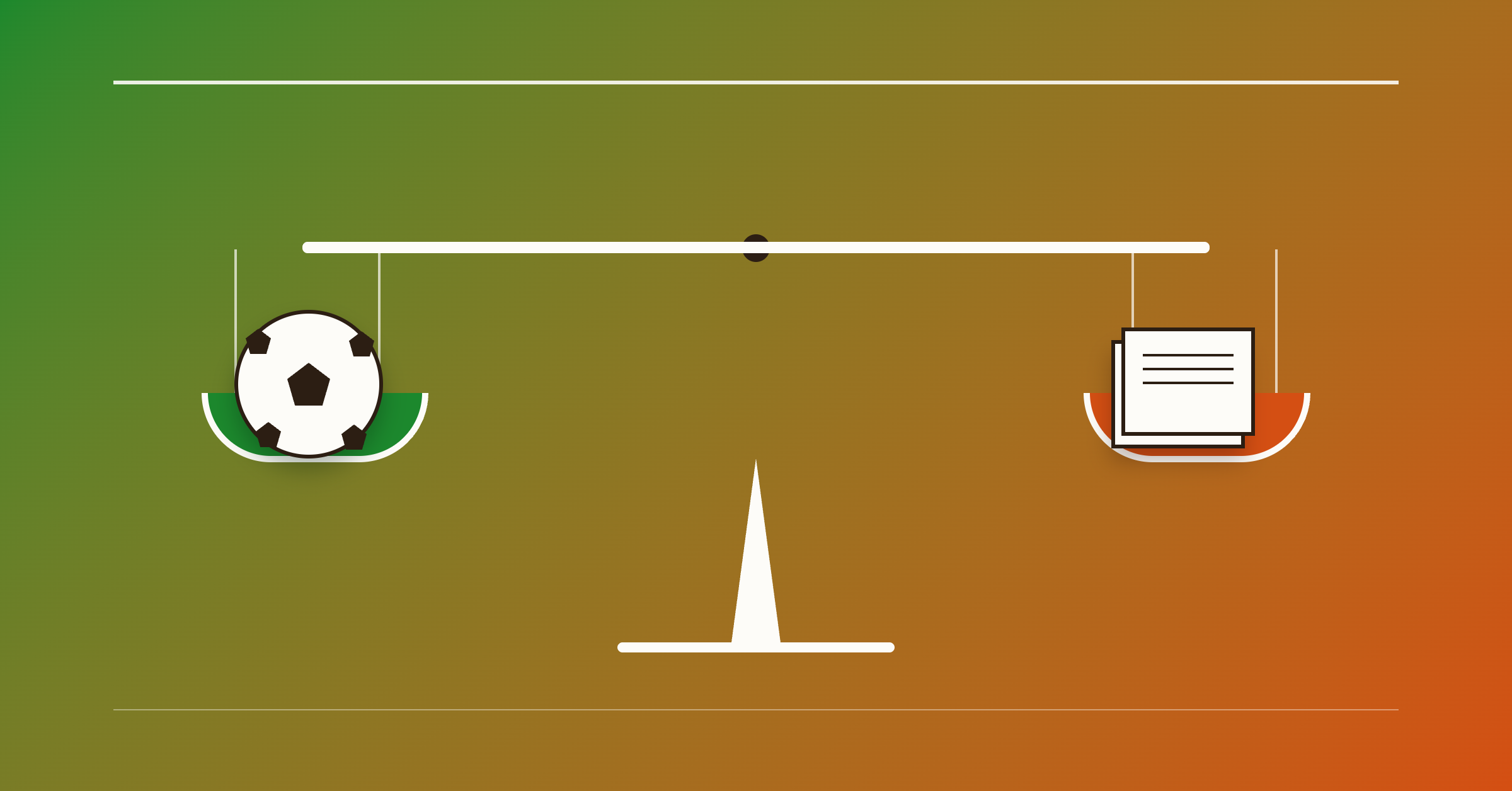
Because the World Cup and BSA compliance are ultimately the same game. One just happens to involve a ball.
The formation: your three lines of defense
Every winning side has a shape. In compliance, we call it the Three Lines of Defense. Your frontline staff—the tellers and branch managers who actually know their customers—are your defensive back line. They see the play develop before anyone else does. Your compliance function is the midfield: reading patterns, distributing information, and deciding when to press. Internal audit is your goalkeeper—the last line of defense, and the one everyone forgets about until the moment that decides the match.
A striker (let's call them "the examiner") only needs one gap in that shape. And those gaps don't appear during the match; they appear in training. It’s the risk assessment you deferred, the KYC refresh that slipped down the priority list, or the alert queue that quietly snowballed to 400.
VAR and your transaction monitoring system
Video Assistant Referee (VAR) and transaction monitoring software have identical reputations: everyone agrees they're necessary, and everyone complains about them. Both review activity after the fact, both generate waves of false positives that wear down the humans reviewing them, and both are only as good as the judgment applied to what they flag.
This is where community institutions face a problem the mega-banks rarely talk about. Standard monitoring software is calibrated for institutional or traditional commercial banking behavior. As Econofi's SAR Narrative Library highlights, activity that looks suspicious to a rigid algorithm is often perfectly legitimate at a cash-primary credit union on the South Side of Chicago or an MDI on the West Side. A street vendor's daily cash deposits aren't automatically structuring. A multi-generational household pooling funds isn't inherently layering. VAR without contextual replay produces bad calls. So does an alert queue reviewed without community context.
The patterns are the playbook
Watch enough football and you learn to recognize plays before they finish. BSA work requires the exact same pattern recognition. The suspicious activity typologies that drive most SAR filings—the ones organized in the Econofi SAR library—each map directly to behaviors peaking around this tournament right now:
-
Structuring (31 U.S.C. § 5324): Breaking transactions into sub-threshold amounts to evade Currency Transaction Reports (CTRs). The Tournament Version: Ticket touts (scalpers) and unlicensed merchandise operations converting large volumes of cash through rapid deposits hovering just under $10,000. Constant proximity to the threshold is the tell; very few legitimate businesses naturally generate an unvaried string of $9,400 deposits.
-
Velocity Anomalies (31 C.F.R. § 1020.320): Sudden transaction volume inconsistent with historical account behavior. A dormant personal account that suddenly springs to life the week your city hosts a group-stage match—cycling rapid inbound and outbound peer-to-peer (P2P) transfers—deserves a second look, even if every individual transaction amount looks mundane.
-
Geographic Risk (FATF/OFAC): Transactions touching higher-risk jurisdictions or opaque financial centers. A tri-nation World Cup means a massive, legitimate surge in cross-border activity with Mexico and Canada—which is exactly the operational "noise" a money launderer wants to hide inside. The FATF has documented for years how sports sectors can be exploited as laundering channels through opaque ticket resale networks and informal hospitality rings.
-
Round-Dollar Patterns: Repeated wires, P2P, or ACH transactions at exact round amounts, completely out of step with normal consumer or payroll behavior. High-volume betting settlements and informal bookmaking love round numbers. During a tournament with record wagering volume, a retail customer receiving exactly $5,000.00 on the dot every few days from varying counterparties is telling you a story.
The Defending Rule: The hardest cases combine two or more of these indicators. Like defending a well-drilled attacking side, the danger isn't any single run—it's the coordination of the attack. You have to investigate each indicator separately before making a combined risk assessment.
The narrative is the highlight reel
A SAR narrative is your match report. Per the FFIEC Manual, it must clearly identify the who, what, where, when, why, and how of the suspicious activity. A great narrative doesn't just list data points; it tells the law enforcement reviewer why the activity matters, the same way a good highlight reel shows you the strategic buildup and tactical errors, not just the ball hitting the net.
This is where resource-constrained institutions get squeezed. MDIs and community banks carry the exact same regulatory weight as money-center institutions, but with a fraction of the compliance headcount. Every hour spent drafting a complex narrative from scratch is an hour taken away from investigating the next alert.
That is the operational gap that resources like Econofi’s template library help close. By providing free, pattern-specific frameworks that incorporate localized community banking context, they help protect the institutions serving the unbanked and underbanked. In these communities, where the racial wealth gap makes financial inclusion vital, affordable compliance infrastructure isn't just an operational preference—it's a mission-critical necessity.
The 30-day overtime
There is one critical difference between the World Cup and BSA compliance: a football match is bound by a 90-minute clock, but your regulatory clock doesn't care about the final whistle.
Under FinCEN rules, the moment your transaction monitoring system flags a pattern, a relentless 30-day regulatory countdown begins. That clock runs from the moment of detection, completely independent of tournament schedules, holiday weekends, or your team's staffing limits.
When the fans pack up and the stadium lights go dark next week, the real work for community institutions begins. The sudden surges, the cross-border velocity spikes, and the round-dollar wagering patterns generated over the last month are sitting in your queue right now. You have exactly 30 days to untangle the "noise" of a historic international festival from actual systemic risk.
The trophy will be hoisted on Sunday, but your compliance team is just entering extra time.
Yellow cards accumulate
In football, a single yellow card doesn't end your match. Neither does a single Matter Requiring Attention (MRA) or an isolated exam finding. But if you accumulate them and ignore the warnings, you eventually find yourself playing down a man—operating under a formal Consent Order with a regulatory monitor watching your every touch.
The institutions that consistently survive tough examination cycles aren't the ones that never trigger an alert. They're the ones that treat every caution as a coaching moment: tuning the monitoring model, retraining the frontline, and thoroughly documenting the fix.
The final whistle on this World Cup blows in less than a week. Your examination cycle never does. Train accordingly.
Templates and pattern descriptions referenced from the Econofi SAR Narrative Library, a free resource for BSA Officers at community banks and MDIs. Reference material only, not legal advice. The SAR Narrative Library at sar.econofi.app provides free SAR narrative templates for BSA Officers at institutions of any size.
Bill Allen is the co-founder of Econofi, a compliance automation and financial wellness platform built for Minority Depository Institutions and the communities they serve. He spent forty years delivering software solutions for large banks and trading exchanges before co-founding Econofi to deliver infrastructure to these communities.
agile Innovation Labs LLC d/b/a Econofi
https://www.econofi.app

(2)_held_30_202604050014.jpeg)